

Discovering Wiktor Wysocki’s New Symphony: A Musical Journey Through Poland
Wiktor Wysocki’s new symphony is a remarkable addition to the world of contemporary classical music. This four-movement piece invites listeners on a profound journey through the landscapes, history, and spirit of Poland. We are thrilled to share insights about this work, which will be premiered at our upcoming concert. If you want to experience this unique symphony live this Friday, you can find all the details and book your tickets here.
The Inspiration Behind the Symphony: Poland’s Rich Heritage
Wysocki’s symphony is deeply rooted in Polish culture and history. Each movement reflects a different facet of Poland’s identity, blending folk traditions with national memory and the evolution of Polish music. The composer’s approach is both respectful and innovative, weaving together past and present in a way that feels fresh yet familiar.
The opening movement sets the tone with a pastoral atmosphere inspired by the Tatra mountains. It begins with the rustic sound of the Dudy Podhalańskie bagpipes, evoking the serene Polish countryside. From there, the music unfolds with energy a tad reminiscent of Beethoven, moving through vivid musical “cores” in the development section that represent war, cultural golden ages, partitions, and the triumph over communism. This movement is a thoughtful reflection on Poland’s complex history, enriched by subtle nods to composers like Karłowicz, Penderecki, Lutosławski, and Chopin.

Exploring the Second Movement: The Sacred Melody of Bogurodzica
The second movement, titled Grave: Bogurodzica, is built around one of Poland’s oldest sacred melodies, dating back to around 1407. This hymn is treated with reverence and creativity, expanding slowly in a canon reminiscent of Górecki’s work. The music grows from a simple, slow chant-like melody into a vast, expressive landscape that mirrors the Polish plains and the enduring role of the church in preserving cultural identity.
A particularly moving moment occurs when the hymn transforms, offering warmth and hope before culminating in a powerful orchestral statement symbolising the 1920 “Miracle at the Vistula.” This movement invites listeners to pause and reflect on the spiritual and historical foundations of Poland.
The Third Movement: A Celebration of Polish Dance and Folk Traditions
The third movement bursts with life and rhythm, drawing on Poland’s five national dances: Kujawiak, Mazur, Oberek, Polonez, and Krakowiak. The composer interweaves these dances with references to Poland’s rivers and the distinctive colouristic style of Polish film music. The result is a vibrant mosaic of motion and celebration. The effectiveness of this is yet to be judged by you, our concertgoers.
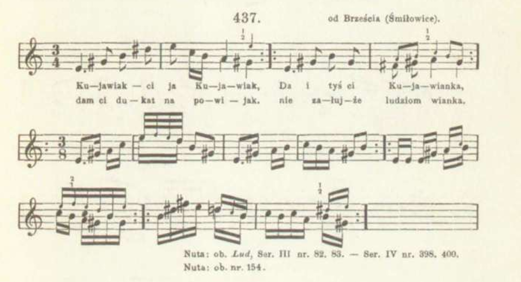
Sudden shifts in tempo and lively rhythms aim to keep the listener engaged, while touches of folk and Klezmer inflections add depth and authenticity. The melodic material is based on a Kujawiak-Oberek from the Kujawsko-Pomorskie Voivodeship, sourced from Kolberg’s folk-music archive. This movement is a joyful homage to regional traditions and the enduring spirit of Polish folk culture. The composer transforms this melody to make up all 5 national dances, and is the source material is shown below.
The Final Movement: Looking Toward the Future of Poland and Its Music
The symphony’s final movement is a broad, sweeping vision of Poland’s future, both musically and culturally. Themes rise over both calm and restless textures, evoking the vastness of the Baltic Sea and a forward-looking musical language. This movement revisits motifs from earlier sections, including the church-bell motif explored by Józef Wieniawski and fragments of Bogurodzica.
Folk-tinged solos weave through the orchestral fabric, binding the symphony’s past and present. The work closes with a spirit of Romantic-Revival, imagining a future built on reflection, renewal, and continuity. It’s a hopeful and inspiring conclusion that resonates deeply with anyone who cherishes the power of music to connect generations.
The Creative Process: A Symphony Born from Patience and Passion
Wysocki conceived this symphony in September 2024, but the composition process was slow and deliberate. The majority of the work was completed between September 2025 and early January 2026, just before rehearsals began. This careful pacing allowed the composer to explore the rich symbolism and stylistic references without losing balance or clarity.
Guided by his tutors Joe Cutler, Howard Skempton, and Andrew Toovey, Wiktor maintained a clear and authentic voice throughout the piece. Their mentorship helped ensure that the symphony remained true to its vision, blending complexity with accessibility.
For those interested in experiencing this extraordinary work live, we encourage you to visit the concert page and secure your tickets. This is a rare opportunity to witness a new symphony that honours tradition while boldly embracing the future.
This symphony is more than just music; it is a heartfelt tribute to Poland’s enduring spirit and cultural richness. Whether you are a seasoned classical music lover or new to orchestral concerts, Wysocki’s work offers a moving and memorable experience. Join us in celebrating this remarkable premiere and immerse yourself in the vibrant world of Polish music.
Tickets and further information are available on our website. Don’t miss this chance to be part of a truly special musical event in Birmingham!

Comments